87Views
Georgia DUI Breath Tests: What the 20-Minute Wait Means
A Georgia DUI breath test involves more than the number on a printout.
The events that occurred just prior to the sample can be of interest.
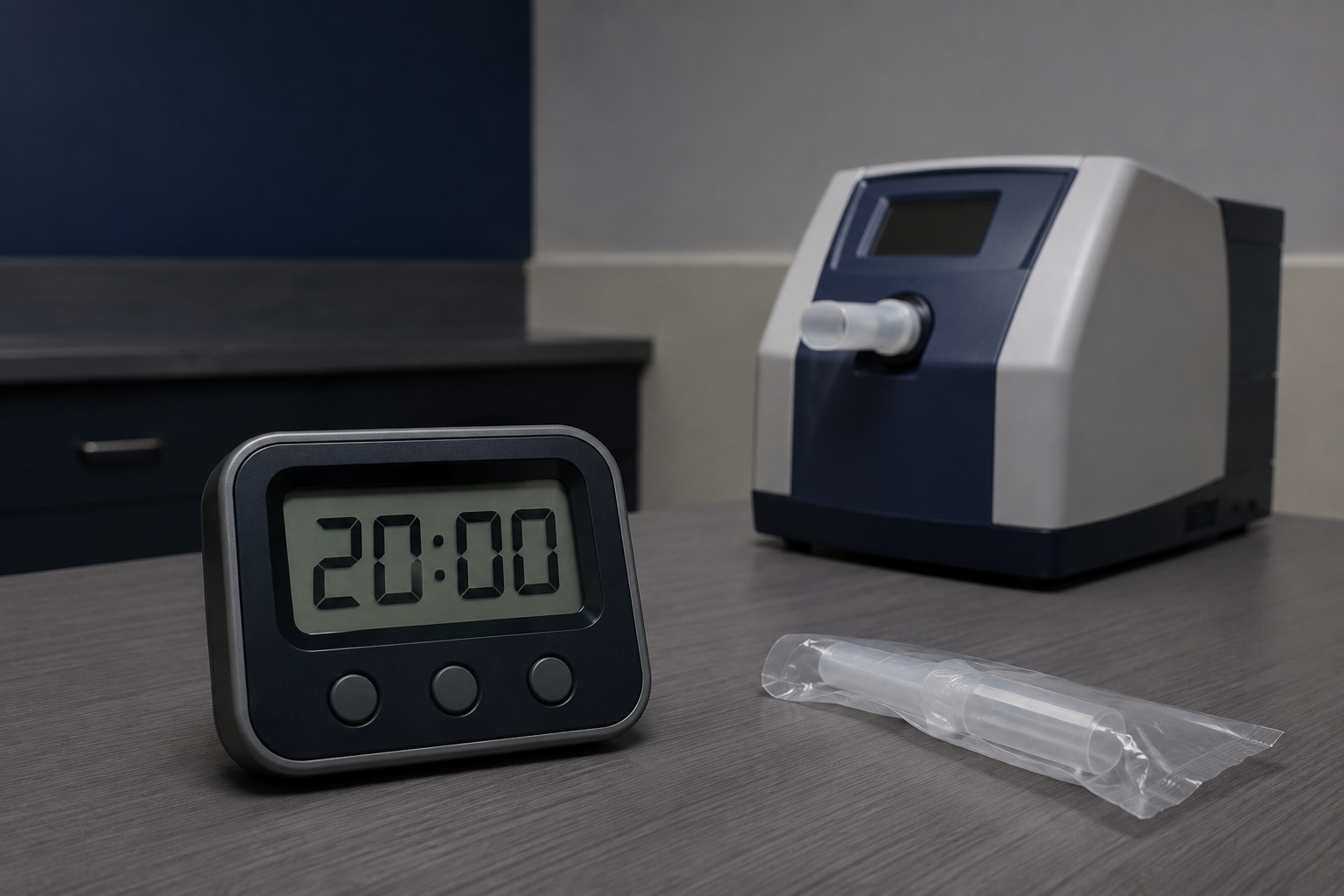
The Georgia DUI 20-minute waiting period is a protective measure designed to minimize the possibility of alcohol in the mouth interfering with the test.
If you were arrested in Sandy Springs or Atlanta, the question you should ask is not just whether the officer waited at the station.
It is whether the relevant period was properly administered and what the records actually show.
What the 20-minute waiting period involves
The GBI’s 2025 operator training manual outlines a deprivation period prior to the first breath test on page 45-46.
Officers should prevent the person being tested from eating, drinking, smoking, chewing or taking oral medication, check the mouth for foreign objects, and monitor for regurgitation.
The operator is still responsible, but can confirm monitoring by another officer.
There is no need to stare continuously.
Transport time may be counted if the necessary conditions are met.
If the person only burps, it is not necessary to restart; if the person is suspected to have regurgitated, a new wait is necessary.
The manual then outlines recovery, a chance to rinse, and to restart the period after vomiting.
These are training safeguards.
The manual sets them apart from the official testing methods in GBI Rule 92-3.
A disputed wait does not, by itself, establish that a result must be excluded or a charge dismissed.
Determine which breath test you have taken.
Many people refer to any device they blew into as a breathalyzer.
This can make the timeline confusing.
The GBI’s implied-consent FAQs differentiate between preliminary roadside alcohol screening and evidential breath testing.
Roadside screening is designed to provide an indication of the presence of alcohol, not an evidential alcohol concentration.
First, determine the device and the specific test you are questioning.
A test with a hand-held device near a patrol car may be a different event from the later test that produced the report in your paperwork.
Record both events in your notes, clearly distinguished.
Don’t assume that a time you remember is the same test as the printed time.
Create a timeline instead of making assumptions.
In a hypothetical example, suppose a driver recalls arriving at a testing site at 10:10 p.m. and providing a sample at 10:18 p.m.
Those eight minutes do not tell the whole story.
A review would have to determine what occurred prior to arrival, who was monitoring the driver, and if the previous interval could be explained.
The reverse should also be considered.
The length of time between arrest and testing is not the only way to describe the driver’s monitoring.
The goal is to recreate events, not pick any two timestamps that seem best.
Some questions to ask counsel:
- What is the claimed waiting period and what evidence is there for this?
- Who was the officer in charge at each time period?
- Was there a transfer of custody from one officer to another?
- What is the evidence from available recordings of the driver’s location and supervision?
- Was there any incident that was reported or captured on video that was relevant?
A missing camera angle is a question to be explored, not automatic proof of a testing issue.
Similarly, a ticked box on a form should be taken in the context of the rest of the evidence.
Keep the documents and your memory.
Record your memory of the sequence while it is still fresh.
Identify the difference between what you remember and what you read in a report.
If you don’t know a time, state that instead of assigning an exact minute.
Save the entire test paper, even if it doesn’t seem useful.
Records, such as the quarterly inspection file, can be requested from the GBI using the serial number on the breath-test report and a relevant date range.
Counsel can determine which records are relevant to the specific case.
Avoid altering original recordings or removing notices while focusing on the breath result.
A practical file may contain the citation, test report, release documents, notes, and a list of questions.
It helps to organize those materials so that a consultation is more focused without having to diagnose the equipment yourself.
Place the timing issue in perspective.
One aspect of the review of chemical-test evidence is the waiting period.
It is not the same as the additional-test issue we discussed in our article on Georgia DUI independent testing – what an additional chemical test can and cannot do.
If you are in Sandy Springs or Atlanta, have James Yeargan look at the actual timeline and records, along with the other issues in your defense.
Visit our contact page to begin that conversation.
This article is intended to give general information; the importance of any disputed event will depend on the facts and the law.