290Views
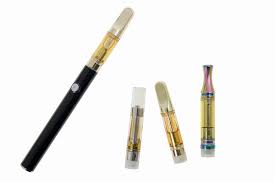
DUI on Post-Legal Cannabis-Based Products in Atlanta: Delta 8, Delta 9, Vape Pen, and the New Reality of Drug DUI Archetypology
Many individuals in Atlanta believe that when you can purchase a cannabis product in a store, then it is safe afterwards to drive. Such an assumption is among the quickest means by which individuals are blindsided by a DUI charge that is drug related. Be it a Delta 8 gummy in a gas station, a Delta 9 edible in a smoke shop, or a vape pen that somebody characterized as mild, the DUI case can be developed based on impairment, but not where you purchased the product.
This subject matter is disorienting since the market has evolved at a pace that is not matched by the level of knowledge among the citizens. Products are sold as legal or even as wellness-relevant. However, when you are in the car, then the problem is straightforward by the states: did you drive less safely due to something you drank.
The question is why such cases are being increasingly seen in Atlanta.
The product variety, potency, and consumption options have never been present in such a manner. A quick hit can be achieved with vapes and concentrates. Foods can be postponed and then be stronger than one expects. There is a lack of understanding of dosing, discrepancy in labeling, and two individuals may respond very differently to the same dosage. That practical uncertainty is a key factor that results in increased drivers getting in situations that they did not expect.
There is also a lack of clean anchor in drug DUI investigations as is frequently the case with alcohol cases. In the case of alcohol, there is an obsession on a number of breaths. In the case of cannabis products, the officers tend to depend more on the driving behavior, observations, field sobriety tests, and verbal communication of the driver at the stop.
The greatest fallacy: legal to purchase does not imply legal to drive.
Practically, the state does not have to show that you purchased an item that is illegal. The accusation is normally that the drug impaired your judgment to drive safely. That is why such cases may seem to be unfair. One might have used something that he/she thought was legal and harmless and still they have ended up with serious repercussions.
The other false belief is that it always feels like being high. Others are weary, blurry-eyed, and nervous, but not euphoric. Especially edibles may produce delayed effects that people have not anticipated. Feeling well, one may begin driving and only to notice that the effects are accumulating.
The way drug DUI cases are usually constructed.
The drug DUI cases are often constructed as a piece of gathered evidence, as opposed to a pivotal test. Some of the reasons that may be mentioned by officers include drifting, irregular speed, slow reaction, turning wide, or struggling with being in a lane. They can include slow speech, atypical attention, the inability to follow instructions, and lack of coordination. The next thing is that the case typically puts a lot of emphasis on field sobriety tests, despite the fact that such tests do not always suit all types of impairments.
In other instances, the officers seek further assessment measures with an aim of drug impairment. That may, or may not, happen depending upon the agency, the situation, and the training of the officers. In any case, the state is invariably attempting to piece together a narrative: driving pattern and observations and roadside testing make up impairment.
The problem of timeline and blood testing.
The time is one key distinction between the alcohol and cannabis related allegations. Alcohol is a fairly predictable up and down trend. Cannabis products are less predictable particularly edibles. The individual may seem to be more affected at the station or later on in the process than when he or she is in the driver seat or vice versa. That puts the timeline as one of the issues.
Compounds or metabolites can be identified through blood tests without necessarily demonstrating impairment at the moment the driver is driving. This does not imply that blood evidence is not important. It refers to the fact that timing is an arena: when the driving occurred, when the stop was made, when tests were conducted, and when a sample was taken. Video and time stamps may be of importance.
Vapes and concentrates: rapid onset and greater-than-anticipated effects.
Vape goods and concentrates can take off. Most of the individuals make one or two pulls and think it is mild and then, they discover that the impact is more powerful than they thought. Within the driving context, a rapid development may cause a sudden difference between I was fine and I suddenly was not. The impairment can be supported by that shift in a police report, although it may have been just a quick exposure of a concentrated product.
Edibles: the dose-delay effect and the dosing trap.
Edibles are the classic trap. Individuals will take a dose and will not experience anything, will take another dose and will later be hit hard. The delay alone can cause one to drive on the ramp-up stage and subsequently suffer later. That can produce sloppy evidence: the driving can be somewhat impaired, but the manners in the road are worse, or the driving can be worse, but the man insists he felt alright. Everything is complicated by the fact that it is difficult to interpret.
Mixed factors: alcohol, fatigue, stress, and other drugs.
There are numerous actual situations that do not use only one factor. A single intake with a cannabinoid product can enhance signs of impairments. What an officer sees can also be complicated with fatigue, anxiety, dehydration, and medications. The presence of several factors complicates the process of isolating real impairment and stress and confusion, and that is why the quality of evidence is so significant.
When you are looking to find an Atlanta DUI Lawyer or DUI Lawyer Atlanta advice since your case concerns Delta 8, Delta 9 or a vape product, then the real question is not whether the product was legal to sell or not. The question is the essence of the state claim on impairment and whether the evidence substantiates the state claim. During such discussions, one may hear the name of Attorney James Yeargan since drug DUI cases may be decided by minor facts such as time, video and method of the investigation.
Assuming that you are also searching Atlanta DUI Attorney or DUI Attorney Atlanta information, the only thing that comes to mind is that the contemporary cannabis market has posed contemporary DUI issues. This is a general article, not a legal one.